// Our story
System status
All systems go ■
Technology has always been personal here._
3 Legged Dog is a family-owned and operated software engineering company built around a simple idea: the people building the technology matter just as much as the technology itself.
Founded in 2001 by Seth Levenson, 3 Legged Dog became a second-generation family business when his daughter, Eliana, purchased the company in 2021.
For more than two decades, we've built software, joined client teams, solved hard problems, and formed the kind of long-term relationships that only happen when people genuinely care about the work.
// The origin
It started with a domain name.
And a three-legged dog.
It was the beginning of the dot-com era, and our founder wanted what every technology company needed: a .com.
There was just one problem. Everything that sounded remotely like a technology company was already taken.
After hours of trying increasingly strange ideas and discovering those were taken too, Diana, the family's three-legged dog, wandered into the room.
So he tried 3LeggedDog.com.
It was available.
He bought it.
Most of the company's early work was with entertainment studios, and 3 Legged Dog sounded just enough like a production company to make sense for an entertainment technology business.
More than two decades later, the name stuck.
So did the dog thing.
Incorporated 2001 // Los Angeles, CA
// The next chapter
Same standards.
New tricks.
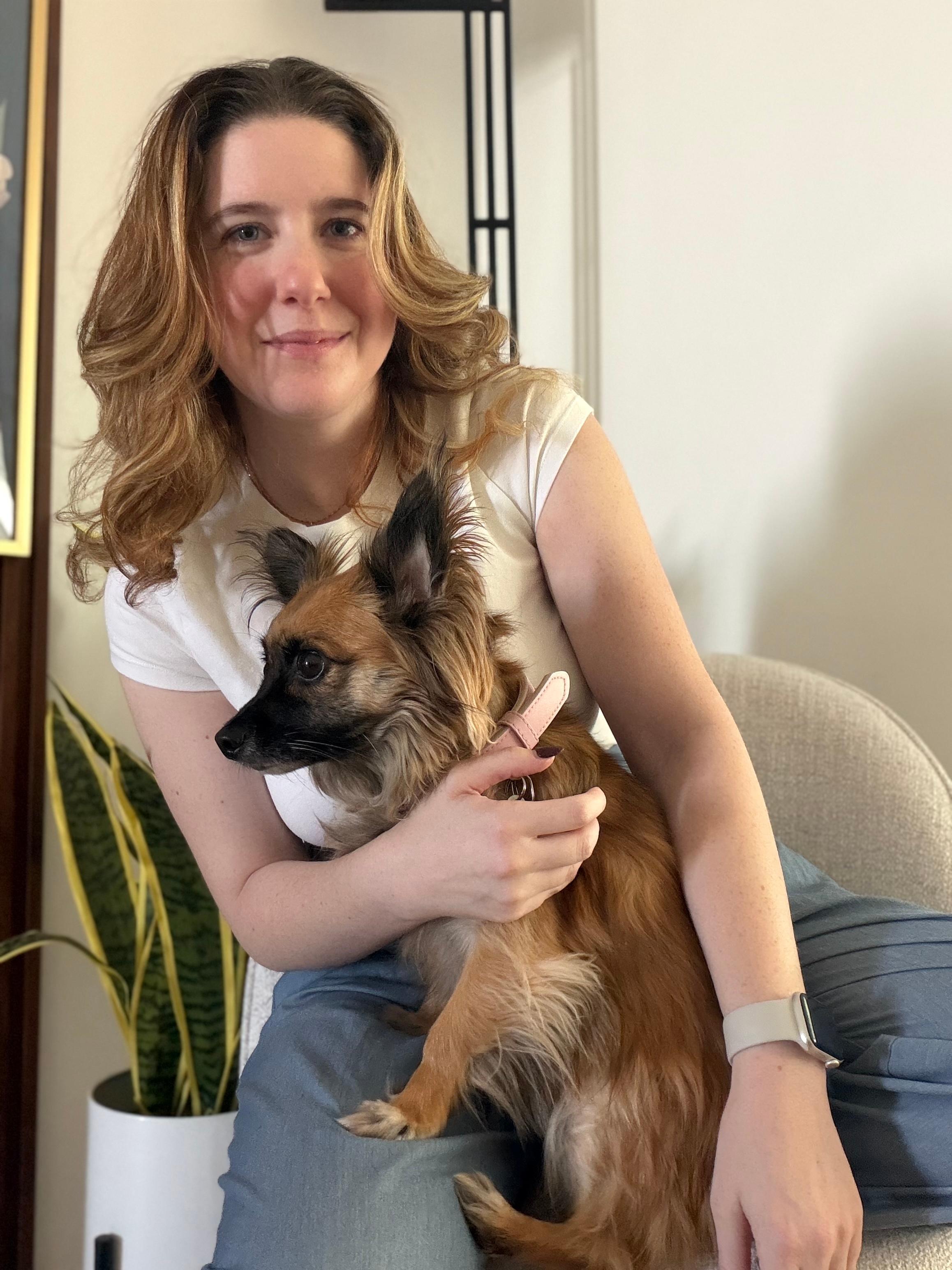
Today, 3 Legged Dog is led by President / CEO Eliana Levenson, whose unconventional path to software engineering continues to shape how she leads the company.
> In Eliana's words_
I wish I could tell the cute story of how my very first website, dedicated to Piglet, of course, was the origin of my love for coding. But the truth is, I never really saw software engineering as a career. My dad was the programmer. I was the creative.
After a few years pursuing screenwriting, though, I was looking for a change, so I decided to give coding a try.
And just like my dad had always predicted...
I loved it.
Programming brought together the two ways my brain naturally works. It's logical, but also deeply creative. There isn't one right way to solve a problem, and the interesting part isn't just getting the code to work. It's figuring out what should be built and how to make it work for the people who actually have to use it.
I went to a software engineering bootcamp to learn the fundamentals and jumped directly into client work. Within my first year, I was the sole engineer on an internal accounting product that cut the refund process from months to days. Less than five years later, I became the technical lead for a high-revenue customer-facing product used by thousands of guests every day.
Those experiences shaped how I think about engineering and how I lead 3 Legged Dog today. The best engineers don't stop at syntax, frameworks, or best practices. They understand the product, the people using it, and the business problem behind the code.
> Good engineering starts with understanding why._
// What hasn't changed
Real relationships.
Real accountability.
Really good tech.
- 01
// Play the long game.
We'd rather build a relationship than win a project. Some of our best work comes from knowing a client's business, product, and people well enough to keep getting better together.
- 02
// Care about the outcome.
Working code isn't the finish line. We care whether what we build solves the problem, works for the people using it, and makes sense for the business behind it.
- 03
// Speak both languages.
The best technical decisions start with understanding the business. We can talk architecture with engineers, outcomes with business leaders, and connect the two when decisions need to get made.
// Still building
The tools keep changing.
The standard doesn't.
The future of software engineering is changing, and we think that's exciting. Better tools can help us build faster, understand more, and spend less time on the parts of development that never needed to be hard.
But the best engineers were never just the people who could write code the fastest or memorize the most syntax. They're the thinkers. The people who can hear a business problem, understand what actually needs to happen, and turn that understanding into a technical solution.
AI makes that judgment more important, not less. It can analyze code, suggest solutions, and accelerate implementation. But code doesn't always contain the full story. Products have users, businesses have constraints, and systems carry years of context that can't always be found in a repository.
The future isn't about writing more code. It's about knowing what code is worth writing.
> Thinking Big_